Projects
How AkureLink Is Tackling Unreliable Internet Through Local Infrastructure
Reliable internet shouldn’t require an IT degree. AkureLink is a new connectivity service that handles the entire technical setup: deploying Starlink, routers, and antennas to deliver stable, managed internet for businesses, events, and co-working communities.
10/28/2026 · 4 min read
By Alcalde · October 28, 2026
Reliable internet access is essential for businesses, remote workers, and technology communities. But in places where connections are inconsistent, getting stable internet can require more than choosing an internet service provider. It can mean finding the right equipment, configuring a network, managing bandwidth, and making sure multiple users can connect reliably.
That challenge is what led to building AkureLink.
During a Roburna Builders Open Session, Timi introduced AkureLink as a real-world connectivity business focused on setting up and managing internet infrastructure for people and organisations that need a more dependable connection.
Rather than approaching connectivity as a purely software problem, AkureLink starts with the physical infrastructure needed to make internet access work.
Starting With a Real Connectivity Problem
Timi explained that the idea came from his experience with unreliable internet services in his area. Connections could become slow or drop at important moments, making it difficult for people to depend on them for work and other everyday activities.
He began exploring how satellite internet, particularly Starlink, could provide a more reliable foundation for connectivity.
But obtaining an internet connection is only one part of the process. The equipment must also be installed and configured to serve the people and locations that need access.
That became the basis of AkureLink: helping customers put the necessary infrastructure in place rather than leaving them to work through the technical setup on their own.
From Equipment Installation to Shared Connectivity
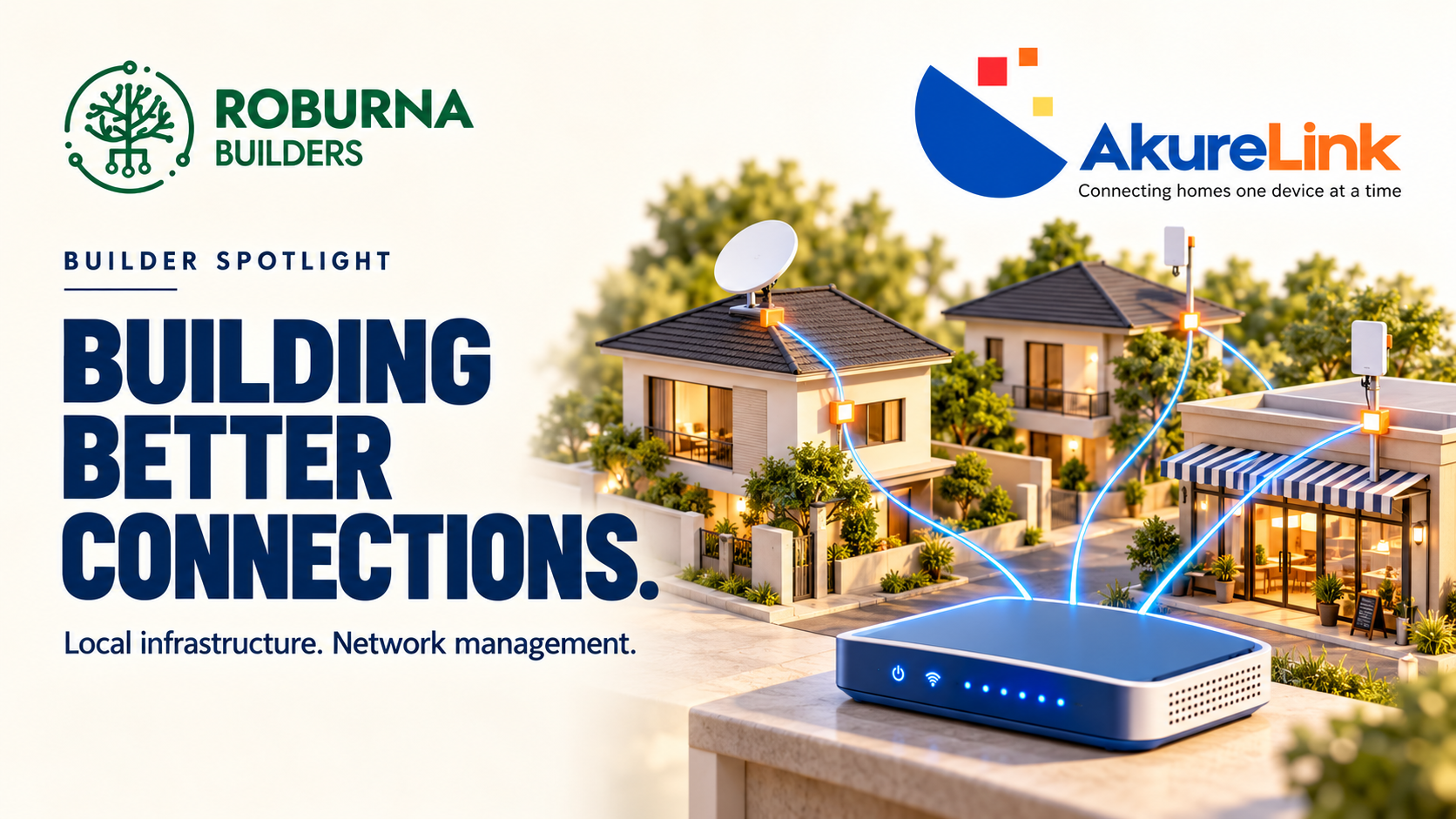
During the session, Timi described a service that involves setting up Starlink equipment alongside radios, point-to-point antennas, routers, switches, and wireless access points.
The configuration depends on the location and its requirements. In some cases, the goal is to provide connectivity across a business premises. In others, the infrastructure may be used to distribute a connection to multiple users within a defined area.
Timi identified cybercafes and technology events, including hackathons, as potential use cases. Event organisers, for example, may need a properly configured network for participants over a limited period. Businesses may also need equipment installed and configured to support their own internet service.
AkureLink's role is to help arrange that setup, manage the network configuration, and make the service ready for use.
This hands-on approach is important to the project's story. The challenge is not simply getting internet access, but making the equipment and network work for the people who depend on them.
Making Network Management Easier
The physical service is one part of AkureLink's direction. Timi also described a software idea intended to make network setup and management easier for people without technical expertise.
Managing a shared connection can involve configuring routers, setting bandwidth limits for individual users, controlling access, blocking certain websites, and adjusting firewall rules. These tasks can be difficult for someone who does not have a technical background.
Timi shared that his own experience configuring this kind of setup helped him recognise an opportunity to simplify the process.
His proposed software-as-a-service offering would aim to let users manage these functions more easily, reducing the amount of manual configuration required. The broader goal is to make it possible for more people to set up and operate shared internet services without needing specialist assistance at every step.
At the time of the Open Session, this software component was still a plan rather than a completed product. It represents a potential next stage for AkureLink, building on the practical experience gained through its infrastructure work.
A Business With Room to Expand
AkureLink's approach combines physical installation and technical support with the possibility of a software platform that could make network management more accessible.
In the discussion, Timi also mentioned that the service was accepting card payments and bank transfers, while crypto payments remained a possible future addition rather than an existing feature.
As the project develops, its next steps will include refining the service, making its setup process easier to repeat, and determining how the software component could support more users.
The opportunity is to make reliable connectivity easier to establish and manage, particularly for customers who need a working solution but do not have the expertise to configure every part of the network themselves.
Building Around a Practical Need
AkureLink began with a problem Timi had experienced firsthand: unreliable internet and the effort required to build a setup that could better meet people's needs.
Its current direction focuses on helping customers establish physical connectivity infrastructure, while its longer-term vision explores how software could simplify the management of those networks.
The project illustrates how building can begin with a practical need in a local environment and develop into a service with broader applications for businesses, events, and other users who depend on reliable internet access.