Article
How to Find the Right People to Build Your Startup With
Building a startup is rarely a one-person job. Even when an idea starts with a single founder, turning it into a working business often requires different skills, perspectives, and people who are willing to contribute to the same goal.
Nov 12, 2026 · 7 min read
By Alcalde · November 12, 2026
Building a startup is rarely a one-person job. Even when an idea starts with a single founder, turning it into a working business often requires different skills, perspectives, and people who are willing to contribute to the same goal.
The challenge is not simply finding someone who wants to start a business. It is finding people whose abilities complement yours, whose expectations align with yours, and who are prepared to put in the work required to build something.
Whether you are looking for a co-founder, a developer, a designer, or someone to help bring your idea to life, choosing the right people can make a significant difference to your progress.
So, where do you start, and what should you look for?
1. Understand What You Need Before Looking for People
Before reaching out to potential collaborators, take time to understand what your project actually needs.
It is easy to start looking for a technical co-founder or someone who can help with development without first identifying the specific gaps in your team.
Start by asking yourself a few questions:
- What problem am I trying to solve?
- What skills are required to build the product?
- What can I contribute myself?
- Which responsibilities can I handle, and where do I need help?
- Am I looking for a long-term co-founder, a project collaborator, or someone to handle a specific task?
This exercise helps you define the kind of person you need rather than searching for someone based on a vague description.
For example, if you have a product idea but lack technical experience, you may need a developer. However, if you already have a working product, your next priority might be someone with marketing, sales, product design, or business development experience.
The goal is to identify the gaps that matter most at your current stage.
2. Look for Complementary Skills, Not Identical Ones
A strong founding team does not necessarily consist of people who know how to do the same things.
In fact, bringing together people with different strengths can make a team more capable of handling the many responsibilities involved in building a business.
Consider a startup developing a financial application. The team might need someone who understands the technical side, someone who can shape the user experience, and someone who understands the market, customers, and business operations.
One person might be able to cover more than one of these areas, but the important thing is that the necessary responsibilities are handled.
This does not mean you should only look for people with skills you do not have. Shared expertise can also be valuable, particularly when a project requires several developers or specialists working on different parts of the same product.
What matters is understanding how each person's contribution fits into the bigger picture.
Before bringing someone on board, be clear about what they can contribute and how their skills complement the rest of the team.
3. Find People in Places Where Builders Already Gather
Once you know what you are looking for, the next challenge is finding people who might be a good fit.
Potential co-founders and collaborators are not always found through formal recruitment. They can be people you meet through professional networks, communities, events, educational institutions, or other projects.
Some useful places to start include:
Professional and builder communities: Online communities bring together people with different skills and interests. Participating in relevant discussions and following what members are working on can help you identify potential collaborators.
Hackathons and startup events: These events provide opportunities to meet people interested in solving problems and developing ideas. Working alongside others during an event can also give you an early sense of how they approach challenges.
Universities and educational communities: Students from different disciplines can bring complementary perspectives. Someone studying computer science might connect with a person studying business, design, or marketing.
Existing projects and open-source communities: Contributing to an existing project can help you meet people who already have experience working with others and are interested in building.
Professional networks and social platforms: Platforms such as LinkedIn and X can help you discover founders, developers, designers, and other professionals. Instead of sending generic requests, engage with their work and start conversations around specific interests.
You can also explore project-focused platforms such as Roburna Builders, where people can discover projects, connect with teams, and explore opportunities to contribute.
The important thing is to participate rather than simply collect contacts. People are more likely to understand what you bring to a team when they have seen your interests, work, and contributions.
4. Look Beyond Skills When Evaluating Someone
Having the right technical or professional skills does not automatically make someone the right person to build a startup with.
You also need to consider how they communicate, approach responsibilities, handle challenges, and work with other people.
Some qualities worth paying attention to include:
- Reliability: Do they follow through on commitments and complete the work they take responsibility for?
- Communication: Can they explain their ideas, listen to others, and discuss disagreements constructively?
- Initiative: Do they take responsibility and look for ways to move the project forward?
- Adaptability: Can they adjust when plans change or unexpected problems arise?
- Accountability: Are they willing to acknowledge mistakes and take responsibility for their contributions?
- Shared values: Do you have compatible expectations about how the team should operate?
For a co-founder, alignment around the long-term direction of the business is particularly important. You should have a reasonable understanding of each other's ambitions, commitment levels, and approach to decision-making.
It is also worth paying attention to warning signs. Someone who consistently misses commitments, avoids difficult conversations, takes credit for other people's work, or makes promises without following through may create problems later.
Do not evaluate someone only by what they say they can do. Pay attention to how they actually work.
5. Start With a Small Project Before Making a Big Commitment
You do not have to make a long-term commitment the first time you meet someone with promising skills.
Working together on a smaller task or project can help you understand whether your working styles are compatible.
For example, you could:
- Build a small feature together.
- Develop a basic prototype.
- Work on a short research or design task.
- Organise a small project or community initiative.
- Collaborate on a limited campaign or product experiment.
During this process, observe how the person communicates, handles feedback, approaches deadlines, and responds when things do not go according to plan.
You should also pay attention to how decisions are made. Can you disagree without turning every discussion into an argument? Can each person accept feedback? Does everyone contribute, or does one person end up carrying most of the work?
A short collaboration will not reveal everything about a potential co-founder or teammate, but it can give you a much clearer picture than a few conversations.
For a founding team, this step is particularly valuable because a co-founder relationship can involve years of shared responsibilities and difficult decisions.
6. Build Relationships by Offering Value
Finding the right people is not just about asking others to join your project. It is also about building relationships in which everyone has a reason to participate.
When reaching out to a potential collaborator, be specific about what you are working on, why you are interested in connecting with them, and what you think they could contribute.
Avoid vague messages asking someone to become your technical co-founder or join a startup without explaining the idea.
Instead, show that you understand their work and have a clear reason for approaching them. Share relevant details about the project, explain what you are trying to accomplish, and give them room to decide whether they are interested.
You should also think about what you can offer in return. This does not always mean money or an immediate business opportunity. You might bring technical expertise, industry knowledge, useful connections, research, design skills, or simply the willingness to contribute meaningfully to a shared project.
Good working relationships develop through consistent communication, mutual respect, and demonstrated effort.
Do not approach every connection as a transaction. Take the time to build trust before expecting someone to commit to your vision.
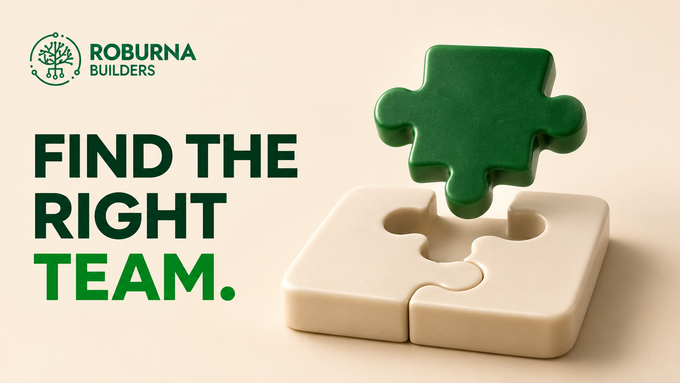
Finding the Right Team Is Part of Building the Startup
Finding people to build your startup with takes more than posting an opportunity or sending out recruitment messages.
You need to understand what your project requires, identify the skills and experience you are missing, meet people who share your interests, and take the time to evaluate whether you can work well together.
You also need to recognise that not every valuable contributor has to become a co-founder. Some people may be better suited to joining a specific project, contributing their expertise, or helping with a particular stage of development.
For founders and aspiring builders looking to connect with people working on real projects, Roburna Builders offers a place to explore projects, discover teams, and find opportunities to participate. Through its Start Project and Join Team features, members can bring their own ideas into the ecosystem or explore existing projects looking for contributors.
Ultimately, the right team is not just a collection of talented people. It is a group that understands what it is trying to build, respects each other's contributions, and can work together to make progress.
Your idea might be the starting point, but the people you build it with will help determine what it becomes.