Tools
The EU's Digital Product Passport Push: An Opportunity for Real-World Digital Innovation
A product's story does not end when it leaves the factory, yet accessing reliable information about a product throughout its lifecycle can be difficult when that information is scattered across different systems and organisations. The EU is working to address this challenge through DPPs, a framework designed to make relevant product information more accessible
10/23/2026 · 5 min read
By Alcalde · October 23, 2026
A product's story does not end when it leaves the factory.
Its materials, manufacturing history, performance, repairability and eventual disposal all matter. Yet accessing reliable information about a product throughout its lifecycle can be difficult when that information is scattered across different systems and organisations.
The European Union is working to address this challenge through Digital Product Passports (DPPs), a framework designed to make relevant product information more accessible, transparent and consistent.
The first major milestone is approaching. From 18 February 2027, digital battery passports will be required for electric vehicle batteries, light means of transport batteries, and industrial batteries with a capacity greater than 2 kWh that are placed on the EU market or put into service.
This development is more than a regulatory change for battery manufacturers. It offers a glimpse into how digital infrastructure could reshape the way businesses manage product information, verify records and coordinate across supply chains.
What Are Digital Product Passports?
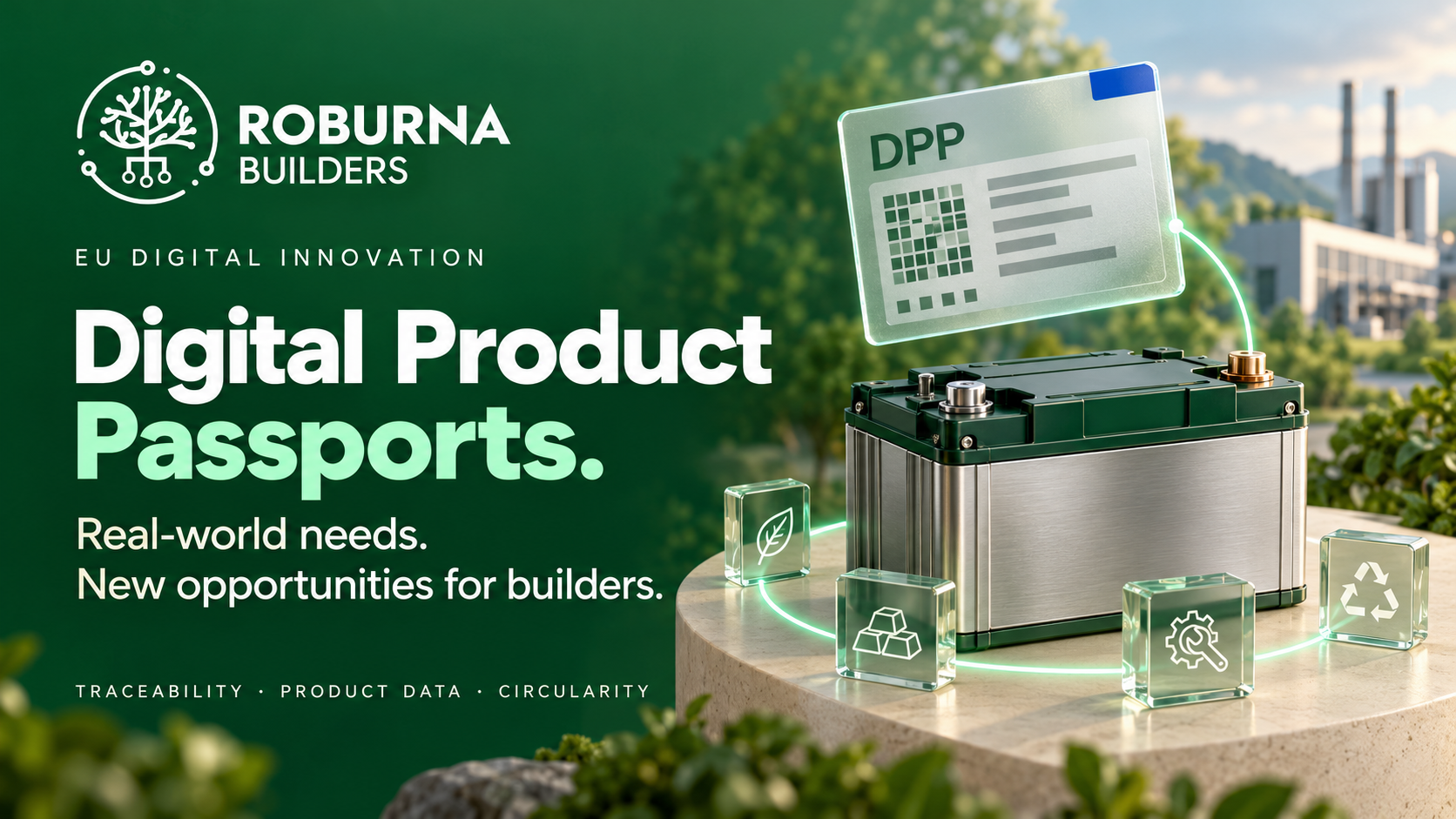
A Digital Product Passport is a digital record containing information about a product, its components or its materials. Depending on the product category and applicable legislation, this information may cover its origin, technical characteristics, materials, environmental performance, repairability, reuse and recycling.
The goal is to make relevant information available to the people who need it, including businesses, consumers, repairers, recyclers and public authorities.
For example, information about a battery could help a repairer understand its characteristics, allow a business to assess its condition, or help a recycler identify the information needed to handle it appropriately.
Under the EU's battery passport requirements, a data carrier such as a QR code will provide access to the relevant digital record. Different users will have access to information according to their permissions.
The framework is intended to support better traceability, more informed decisions, circular business models and regulatory compliance.
Source: European Commission, Digital Product Passport.
Why February 2027 Matters
The EU Batteries Regulation (EU) 2023/1542 establishes the battery passport requirement under Article 77.
From 18 February 2027, the requirement applies to each light means of transport battery, each industrial battery with a capacity greater than 2 kWh, and each electric vehicle battery placed on the market or put into service.
The passport will contain information about the battery model and information specific to the individual battery. The regulation also distinguishes between information accessible to the public and information restricted to authorised bodies or other parties with legitimate interests.
Not every possible data field becomes mandatory on the same date. Some requirements have separate application dates, so businesses must assess the obligations applicable to their products.
The significance of this deadline lies in the need to organise product information in a reliable, accessible and structured digital format. Businesses affected by the regulation must consider not only what information they hold, but also how it is maintained and made available throughout the relevant product lifecycle.
Source: Regulation (EU) 2023/1542, Article 77.
The Bigger Challenge Is Digital Infrastructure
A digital passport may look like a simple record accessed through a QR code. Behind it, however, is a broader infrastructure challenge.
Product information can originate from manufacturers, component suppliers, distributors, service providers and other participants in a supply chain. These organisations may use different systems, data formats and processes. Keeping records consistent, accessible and up to date requires coordination.
Businesses also need to consider how information is verified, who can update it, how access is controlled and how records remain useful as a product changes over time.
These challenges create opportunities for practical digital solutions.
Developers could explore tools for product identification, data management, supply-chain visibility, compliance workflows, repair and recycling records, and connections between existing business systems. Other opportunities may emerge around helping smaller businesses organise product data and prepare for evolving requirements.
The objective is not simply to put information online. It is to make that information useful and dependable for the people and organisations that rely on it.
Where Blockchain Could Fit
Blockchain is one technology developers may consider when designing solutions for product traceability and information sharing.
For example, a blockchain-based application could record important supply-chain events, establish a shared history of updates, or provide verifiable references to product records maintained across multiple organisations.
In a suitable design, this could help participants establish a common view of selected events without relying entirely on one organisation's internal database.
However, blockchain is not a requirement of the EU Digital Product Passport framework. Nor does putting information on a blockchain automatically make that information accurate. Reliable systems still need trusted data sources, appropriate access controls, privacy safeguards and processes for correcting errors.
A practical architecture may combine conventional databases, existing business systems and blockchain infrastructure, using each where it offers a clear benefit.
The important question for developers is not whether every product needs blockchain. It is whether a particular technology can solve a real problem more effectively, affordably and reliably.
What This Means for Builders
Developments such as the Digital Product Passport initiative illustrate how changes in regulation, industry practices and consumer expectations can create new problems for technology to solve.
For founders and developers, these problems can be starting points for product ideas.
A team might investigate how small manufacturers manage product records. Another might explore tools that help businesses share information with repairers and recyclers. Others could focus on supply-chain data, product authentication, sustainability reporting or integrations between existing systems.
These are potential areas for exploration, not guaranteed business opportunities. Each would require research into customer needs, existing solutions, applicable regulations and the practical challenges of implementation.
The wider lesson is that useful technology often emerges from understanding how industries actually operate and identifying where existing processes fall short.
Building for Real-World Needs
At Roburna Builders, the focus is on helping builders develop ideas into practical products and services.
The growing importance of product traceability is one example of the kinds of real-world challenges developers can investigate. It connects digital infrastructure with manufacturing, commerce, sustainability and the movement of goods across supply chains.
For builders, the opportunity begins with understanding the problem: what information needs to be available, who needs it, what makes it trustworthy and how a solution could fit into existing workflows.
From there, a concept can be tested, refined and developed into something useful.
The EU's Digital Product Passport initiative is one regulatory development to watch, but its broader significance extends beyond batteries. It highlights the growing role of digital systems in connecting physical products with the information needed to understand, manage and reuse them.
As industries continue to digitise, builders who understand these real-world needs will be better positioned to identify meaningful problems and create solutions around them.
Explore Roburna Builders: https://roburnabuilders.com/